%20Logo.svg)

Access control is one of the first considerations when upgrading doors across hospitality properties. But once the decision to go smart is made, the next question is often: “Should I choose a lever lock or a deadbolt?”
Both provide secure, keyless entry, but the way they function mechanically leads to practical differences in user experience, installation, and ongoing operations.
Rather than asking which lock is better, the more useful question is which lock type aligns best with a property’s door layouts, operational workflows, and how people move through the space.
Understanding these functional differences makes it easier to choose the right solution.
Lever Smart Locks vs. Smart Deadbolts: Understanding the Difference
Before comparing features and use cases, it helps to understand how each lock functions mechanically.
A lever smart lock combines the handle and locking mechanism into a single unit. When access is granted, the lock disengages and the door is opened by pressing down the lever.
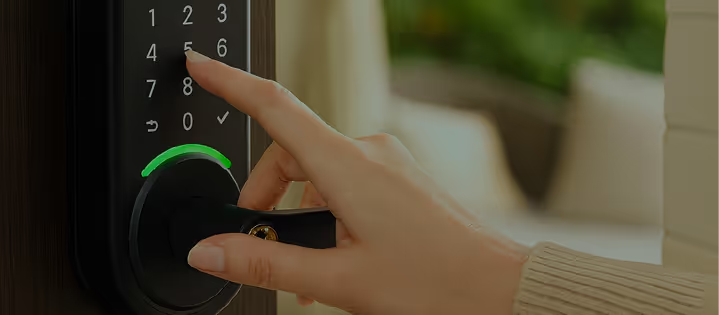
A smart deadbolt controls only the locking bolt and is typically installed above an existing handle. The bolt retracts electronically when access is approved, while the handle itself remains unchanged.
When Lever Smart Locks Are a Better Fit
Lever smart locks are ideal when a smooth, hotel-style guest experience is a priority.
Hotel-Style Auto-Locking
Lever smart locks can be configured to automatically relock after a set period, similar to traditional hotel doors. Once the door closes, it secures itself after a short delay, reducing reliance on guests to manually lock the door and improving overall security.
Efficient Power Use
Without the need to extend and retract a deadbolt into the door frame, lever locks generally use less power to operate. Over time, this translates to longer battery life and reduced maintenance.
Works With Mechanical Deadbolts
Lever smart locks can be used alongside traditional mechanical deadbolts, allowing guests to add an extra layer of privacy when inside, while maintaining automated access on the exterior.
When Smart Deadbolts Are a Better Fit
Smart deadbolts are often the practical option for retrofit projects and more traditional door setups.
Keeps the Existing Handle
Smart deadbolts upgrade access control while leaving the existing door handle in place. This is often preferred in retrofit projects where maintaining the current handle style and overall aesthetic is important.
Fits Doors With Limited Space
Some doors don’t have sufficient vertical space between the handle and deadbolt to accommodate a lever smart lock without modification. In these cases, smart deadbolts are often a better fit, as they can typically be installed into the existing cutout and do not require changes to the door.
Replacing an Existing Deadbolt
For properties already using mechanical or electronic deadbolts, upgrading to a smart deadbolt allows for a straightforward like-for-like replacement. This allows for faster installation while avoiding unnecessary door modifications.
Consistency Across Multiple Entrances
For properties with multiple entry points, smart deadbolts can support consistency and simplicity across different door layouts. Since they can be paired with nearly any handle style, they offer flexibility while maintaining a standardized access approach.
Choosing the Best Fit for Your Doors
Choosing between a lever smart lock and a smart deadbolt ultimately comes down to door layout, installation requirements, and how access is meant to function day to day across a property. Each option brings different advantages depending on the physical setup of the door and the operational needs of the space.
At 33 Lock, both lever and deadbolt smart lock options are designed with these real-world scenarios in mind. If you’re exploring smart access upgrades and still have questions about which approach makes the most sense for your property, the 33 Lock team is always happy to help.